How to Be a Person in the World
Do you ever have the feeling that everyone else received a user manual for life?
You know, like an instruction booklet for the ordinary machinery of being a person. Things like…how people know when to leave a party. How they keep a car registered and a dentist appointment made and a friendship maintained. Or how they seem to have absorbed a set of instructions during a week you must have missed.
It’s a lonely feeling, and it’s oddly specific. There’s common information out there that never reached you! Everyone else seems to be operating with access to it.
I’ve felt this way for most of my adult life.
The hidden curriculum
In school, there’s the curriculum you’re given, and then there’s everything you’re expected to figure out:
- how to ask for help
- which questions are welcome (and which end up making you feel dumb)
- what to do when you’re confused but everyone else is nodding along
- how to recover from an embarrassing moment when you’ll be seeing the same people tomorrow
The same thing happens long after school ends. You start a job and receive instructions for the work, but much less guidance on how to disagree with your boss. You move to a new city and learn where to buy groceries, but making friends requires a different kind of knowledge.
This is the hidden curriculum: the lessons that shape your experience even though nobody puts them on the syllabus.
Some people receive more help with it. Someone explains a situation afterward, makes an introduction, or tells them what to expect. Others learn through trial and error, sometimes without knowing what the error was.
That last part can be especially frustrating. It’s hard to learn from an experience when you can’t even tell what happened.
Social cues
Social cues deserve several chapters in this missing manual.
When someone says “We should get together sometime,” are you supposed to suggest a date? When they say they’re busy, should you try again next week or leave it alone? (Are they just being polite, and they don’t actually want to hang out?)
How much detail does someone want when they ask how you’re doing? At what point does giving someone space become letting a friendship disappear?
You can replay a conversation for an hour and still come away unsure.
To make it even more confusing, the rules vary. A way of speaking that feels natural in one family, workplace, or culture can land differently in another. You may learn something useful, then you enter a room where it no longer works.
Meanwhile, the people you’re watching just seem comfortable. You see them say the right thing and move on. You rarely get to see the conversation they replayed on the way home.
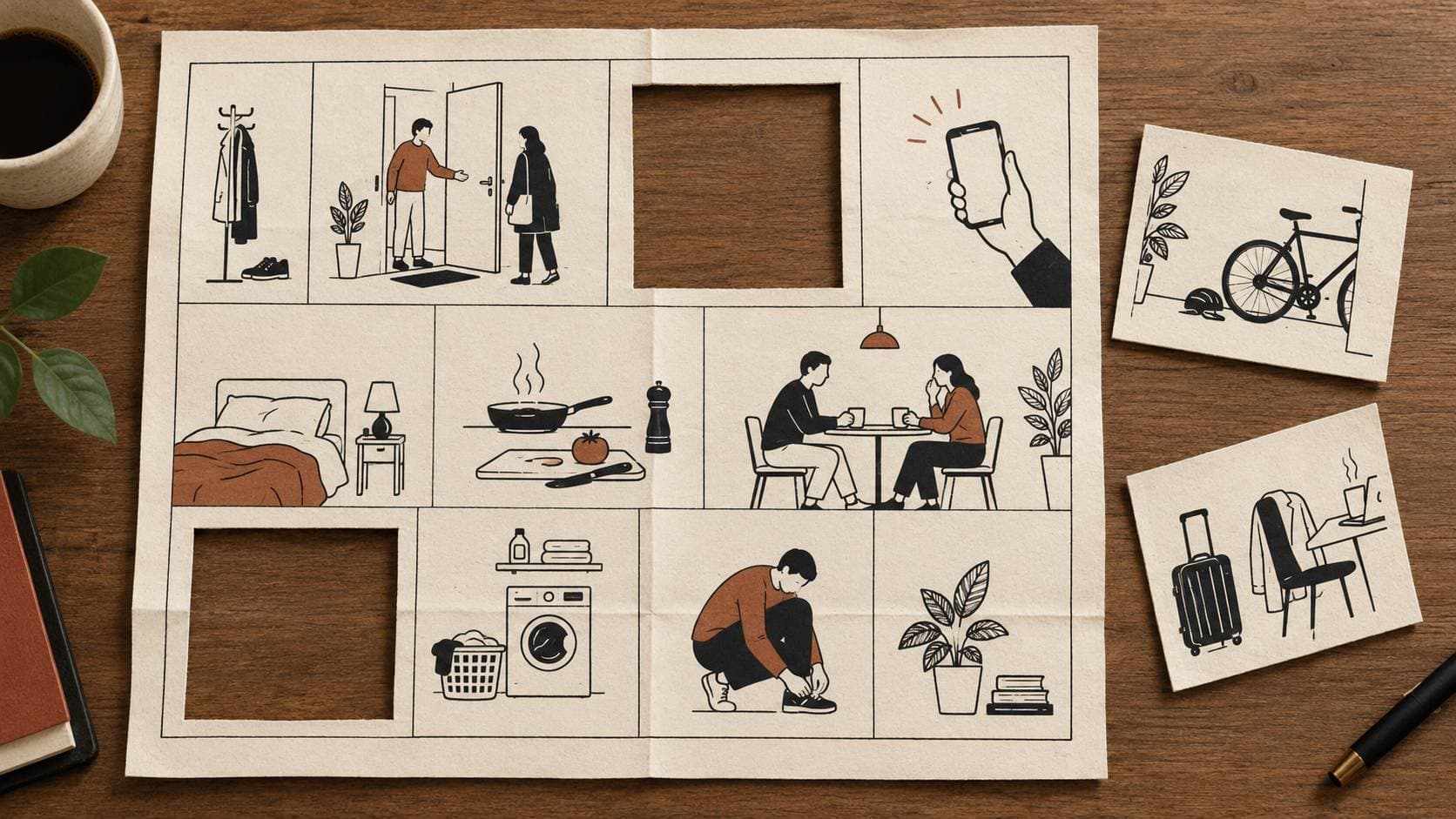
The pages arrive out of order
Over time, we begin to assemble parts of our manual.
We gain an important clue about asking for what we need. We realize we’ve mastered the art of going somewhere alone. We have a difficult conversation we would once have avoided.
Wow! Now we’re cooking.
But these discoveries rarely arrive in sequence. There’s no orderly progression from Chapter One to Chapter Two, with a short transition quiz to make sure we’re ready.
You might know how to take a major risk and still struggle to make a phone call (story of my life). You might be good at starting relationships and have no idea how to close one. So you delay, become less available, hope the other person gets the message—and generally handle it poorly.
Or you fail to take a simple action that would make your life better: book the appointment, ask the question, tell someone you’d like to see them again.
From the outside, the gap can look strange. You’ve done things that seem much harder. Why is this small thing defeating you?
I think it’s because learning one skill doesn’t automatically teach you the next. Being capable in one part of your life doesn’t mean you received the instructions for every other part.
How to be a person in the world
If your missing manual had a name, it might be: How to Be a Person in the World.
It could cover the things we’re expected to know but often have to learn awkwardly, on our own.
Each part could start with a situation someone recognizes and stay with it long enough to be useful. What makes this hard? What have we misunderstood? What could we try?
We’d also have to decide which instructions belong in our own manual. Some conventions help us live alongside other people, while others send us toward a life we don’t want. Learning how something works gives us more room to make that choice.
What’s something you had to learn that everyone else seemed to know already?
Before you go, here’s a small experiment: think of something you know how to do now that once felt confusing or difficult.
It doesn’t have to be impressive. Maybe you’ve learned how to ask for help, say no without a long explanation, or show up somewhere on your own.
That’s a page of the manual you’ve already found! You can give yourself some credit for it, even while other pages are missing.