Time Anxiety and Neurodivergence: How ADHD Shapes Our Relationship with Time
If you have ADHD, autism, or another neurodivergent profile, time anxiety often hits harder. The standard productivity advice you've been handed since middle school wasn't built for your brain. Trying to use it against time anxiety can make the anxiety worse.
Three things make time anxiety more intense for neurodivergent people:
Time blindness
The difficulty estimating how long things will take, or feeling time pass at all. A "five-minute task" turns into ninety minutes. The future feels either too close or impossibly far. When you can't accurately sense time, you can't plan against it. You end up feeling like you're failing at something other people seem to manage instinctively.
Executive function differences
Even when you know exactly what you should be doing, getting started can feel impossible. The gap between knowing and doing produces a particular kind of guilt. You watch yourself not do the thing while the clock keeps moving. Time anxiety builds, and so does shame.
Hyperfocus that picks the wrong target
Many ADHD brains can focus deeply, but not on demand. You'll lose four hours to research that wasn't urgent, then realize the actual deadline is in an hour. The mismatch between attention and intent fuels the anxiety. You're not lazy. You're not undisciplined. Your brain just chose differently than your calendar wanted.
What helps (and what doesn't)
Standard productivity advice doesn't account for any of this. "Just block your time" doesn't work if you can't feel time. "Just start" doesn't work if your executive function isn't online. The result: neurodivergent people often blame themselves for failing at strategies that were never built for them.
What helps is different for everyone, but a few things show up across most people I've talked to:
- Naming it. Recognizing that you're experiencing time anxiety, and that it has a particular shape for ND minds, takes some of the power away.
- Building scaffolding instead of discipline. External structure like timers, body doubling, and accountability usually beats willpower.
- Letting some things go unfinished. Trying to finish everything is the trap. Choosing what gets your attention, and accepting that everything else won't, is the way out.
- Finding your people. Standard productivity communities can make ND time anxiety worse. Spaces built for neurodivergent minds make a real difference.
I've written more about time anxiety in general at Time Anxiety, including the framework I use. The book Time Anxiety goes deeper, with a chapter on the neurodivergent experience. For the community side, I started NeuroDiversion, an annual gathering for neurodivergent adults, because the standard advice doesn't fit our brains either. We need our own conversations.
Below: notes from when I first announced the book and the conference. Kept here for the record.
If you haven’t heard much from me this year, you might not be subscribed to my most current newsletter, which is all about mental health and purposeful productivity:
–> YearofMentalHealth.com
Most of my original subscribers moved over with me, but not everyone did. If you haven’t been receiving the new mailings, I thought I’d check in with some end-of-year updates. 📌
Short version: I have a new book coming in April, and before that I’ll be hosting a new event focused on neurodivergence.
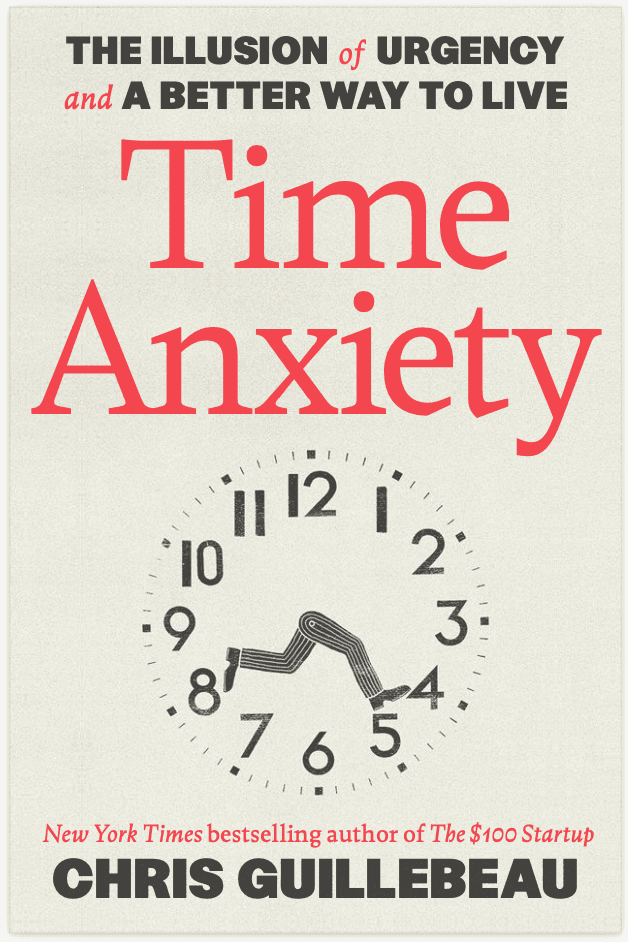
My new book Time Anxiety comes out on April 15, 2025, and I’m very excited about this one! It’s the book I’ve wanted to write for at least five years.
You can pre-order now from your choice of retailers:
(Those are just a few links to the most common merchants. Your local bookstore is great too! Pre-ordering anywhere is helpful to authors.)
There will also be audio and ebook versions. 🎧 📱
For readers outside the U.S., pre-order from your favorite local bookstore or Amazon site.
Pre-orders are a big deal for authors, they help books reach more readers. If you’ve enjoyed my work before, I’d love for you to reserve your copy! 🙏
And that’s not all, I’m also starting a new in-person event! It’s called NeuroDiversion, and I’d love for you to be there.

The inaugural gathering will be held in Austin, Texas in March 2025.
If you’d like to be part of it, or at least be kept updated on ticket sales, join the dedicated waiting list so you’ll be the first to know all the details. ✨✨✨
The team and I are planning to open Wave 1 ticket sales in early January. We’ll also be announcing speakers, hotel discounts, and a detailed schedule soon.
I’ll have more to say about both of these big adventures, the new book and new event, in the coming months.
Remember, most of my regular writing, including the weekly newsletter, is now at YearofMentalHealth.com. There’s a free and paid version (with scholarships available for anyone who can’t afford the paid version).
If you’re not into joining a new newsletter, however, I get it! I’ll try to check in over here once in a while as well.
I also post most days on Instagram, LinkedIn, and (less often) Facebook and Threads.
Hope you’ve been well, and I hope we can be in touch more in the near future!